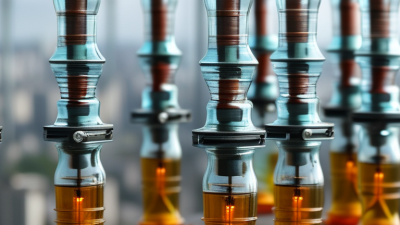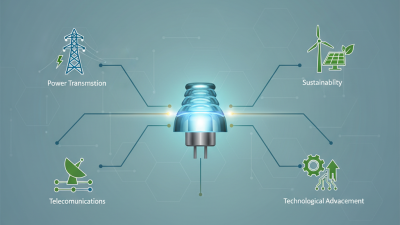
As electricity networks expand, utilities need insulators that remain reliable in moisture, fog, salt, and industrial pollution. The International Energy Agency’s Electricity 2024 report expects global electricity demand to grow by about 3.4% annually through 2026. That growth increases pressure on transmission and distribution equipment. It also makes surface performance more important.
The IEA’s Electricity Grids and Secure Energy Transitions report estimates that more than 80 million kilometers of grids must be added or refurbished worldwide by 2040. In this environment, an Anti-Fog Glass Insulator can support clearer surfaces and more stable insulation performance during humid conditions. However, “anti-fog” is not a universal technical guarantee. Coating durability, hydrophobic recovery, pollution resistance, and installation quality still require careful verification. Small details matter.
This guide examines leading suppliers across Asia, Europe, North America, and other major manufacturing regions. It considers glass quality, testing capacity, production experience, delivery support, and documented compliance with IEC 60383-1 requirements. CIGRE technical publications also provide useful guidance on pollution performance and outdoor insulation selection. Supplier brochures alone are not enough. Ask for test reports, coating specifications, aging results, and field references.
No ranking is flawless. Regional climate, voltage level, and maintenance practices change the best choice. A supplier performing well in dry conditions may struggle near a coastal substation. Therefore, this review combines published data with practical purchasing considerations. Some claims remain difficult to compare, and that limitation deserves attention. Reliable decisions should be based on evidence, not impressive catalog language.
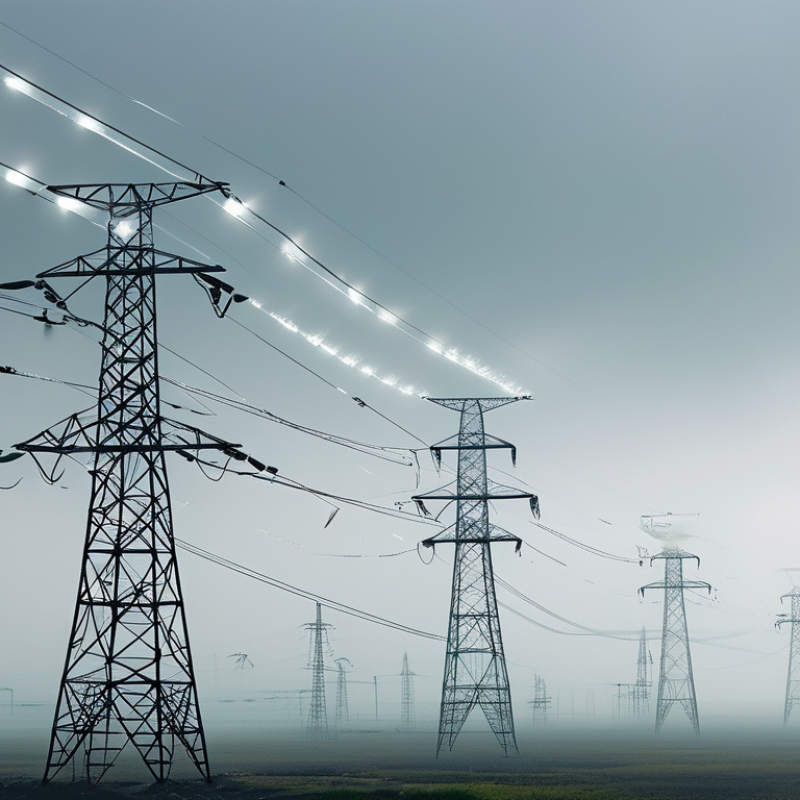
An anti-fog glass insulator is a glass electrical insulator designed to reduce moisture-related surface problems. It is not simply ordinary glass with a special label. The term is also not a single universal IEC product class. In practice, suppliers may use hydrophilic coatings, improved shed profiles, or carefully controlled glass surfaces.
When fog settles on pollution, it can create a continuous wet film. That film increases leakage current and may trigger surface flashover. IEC 60815 focuses on selecting and dimensioning insulators for polluted environments, while IEC 60383 covers glass and ceramic insulators for overhead power lines. Field engineers should check test conditions, salt-fog performance, coating durability, and mechanical strength. A clear surface helps, but it cannot correct poor drainage or heavy contamination.
Tips: Ask for salt-fog test results, coating aging data, and thermal-cycle records. Confirm whether testing used clean or polluted glass. This detail matters. CIGRE guidance repeatedly links contamination, wetting, and leakage behavior. The International Energy Agency reported in its 2023 grid study that the world may need 80 million additional or replaced grid kilometers by 2040. That expansion increases demand for dependable outdoor insulation, especially near coasts and industrial areas. Still, “anti-fog” can be an imperfect purchasing term. Request the exact standard, voltage class, climate exposure, and maintenance plan before comparing suppliers.
Top Anti Fog Glass Insulator Suppliers Worldwide?
Reliable suppliers should demonstrate more than attractive catalogs. Their glass insulators need stable dielectric strength, accurate dimensions, and strong mechanical resistance. The glass body should remain smooth, without cracks, bubbles, or sharp surface defects. Anti-fog performance usually depends on a hydrophilic coating or carefully controlled surface treatment. It should reduce condensed droplets during humidity changes, not merely improve appearance. Ask suppliers for coating adhesion, aging, ultraviolet exposure, and thermal cycling data.
Performance standards help separate tested products from unverified claims. Check compliance with relevant IEC requirements, including IEC 60383 for overhead-line insulators and IEC 60507 for artificial pollution testing. Test reports should identify voltage ratings, creepage distance, mechanical load, and salt-fog conditions. ISO 9001 certification can support quality control, but it cannot replace product-specific evidence. Field records, batch traceability, and independent laboratory results also matter. A certificate alone may still hide weak testing.
Tips: Request samples before bulk purchasing. Inspect coating uniformity under angled light. Compare leakage-current results after moisture exposure. Confirm whether the quoted anti-fog rating applies to the complete insulator or only its surface treatment. Suppliers may provide incomplete data, and that should prompt careful questions, not quick rejection. Condensation behavior varies with climate, mounting position, and pollution, so laboratory performance may not perfectly match an exposed installation.
Minimum specific creepage distances commonly used for overhead-line insulator selection under different pollution severity levels. Higher values improve resistance to surface flashover in fog, salt, and industrial pollution conditions.
Reference values: IEC 60815 pollution-design guidance — Light: 16 mm/kV, Medium: 20 mm/kV, Heavy: 25 mm/kV, Very Heavy: 31 mm/kV. Actual selection should also consider system voltage, altitude, contamination composition, washing conditions, mechanical load, and applicable IEC or ANSI product standards.
Leading anti-fog glass insulator suppliers worldwide are responding to expanding grid and renewable-energy demand. The International Energy Agency’s Renewables 2024 report forecasts nearly 5,500 GW of new renewable capacity by 2030. That growth increases demand for reliable outdoor insulation in humid, coastal, and polluted environments.
Strong suppliers should provide more than a clear coating. They should demonstrate hydrophilic surface performance, stable adhesion, ultraviolet resistance, and low-temperature durability. Testing should follow relevant IEC 60383 and IEC 60815 requirements, especially for pollution and wetting conditions. Buyers should request salt-spray results, thermal cycling data, leakage-current measurements, and factory quality records. Small details matter. A coating that performs well in a laboratory may fail beside a foggy transmission corridor.
The most credible manufacturers combine glass-forming experience with electrical-design expertise. They use controlled tempering, precise coating thickness, and documented batch inspection. ISO 9001 certification can support traceability, but it cannot replace independent product testing. The Global Wind Energy Council reported more than 117 GW of new wind capacity in 2023, showing how quickly exposed infrastructure is expanding. Still, the anti-fog insulator category lacks one universal comparison method. That weakness deserves attention. Suppliers should publish service-life assumptions, maintenance needs, and field results instead of relying on attractive product claims.
| Supplier Region | Common Product Configuration | Typical Glass Material | Anti-Fog Approach | Common Application | Relevant Technical References | Customization Availability |
|---|---|---|---|---|---|---|
| East Asia | Hardened glass suspension and pin-type insulators | Tempered electrical-grade glass | Hydrophobic surface treatment, optimized shed geometry, or application-specific heating elements | Overhead transmission and distribution lines in humid or polluted environments | IEC 60383-1, IEC 61109, utility-specific pollution and mechanical tests | High; dimensions, fittings, creepage distance, coatings, and packaging can usually be specified |
| Europe | High-strength glass suspension strings and line post assemblies | Thermally tempered soda-lime or electrical-grade glass | Long-creepage designs, controlled surface finish, and certified pollution-performance testing | High-voltage networks, coastal corridors, rail electrification, and industrial zones | IEC 60383-1, IEC 60168, EN-adopted IEC standards, and local grid specifications | High; engineering documentation and traceability are commonly required |
| North America | Glass suspension units, station post insulators, and retrofit assemblies | Tempered glass designed for mechanical and electrical loading | Extended creepage, hydrophobic coatings, and anti-condensation solutions selected by application | Utility substations, transmission lines, cold-weather installations, and coastal systems | IEC-based testing or applicable national utility and ASTM requirements | Medium to high; utility-approved drawings and qualification tests may be necessary |
| South Asia | Suspension, stay, and pin-type glass insulators for distribution networks | Tempered glass with galvanized metal fittings | Increased creepage distance, anti-pollution shed profiles, and optional surface treatment | Monsoon climates, agricultural areas, coastal regions, and industrial corridors | IEC 60383-1, local utility specifications, and pollution-level testing | High for standard designs; custom tooling may be required for non-standard profiles |
| Southeast Asia | Outdoor line insulators with anti-pollution and moisture-resistant configurations | Tempered glass suitable for high humidity and salt exposure | Hydrophobic coating, larger leakage distance, and water-shedding shed design | Tropical transmission lines, islands, ports, and marine-adjacent substations | IEC 60383-1, salt-fog testing, and purchaser-defined environmental tests | Medium to high; environmental requirements should be stated before quotation |
| Middle East and North Africa | High-creepage suspension and station insulator systems | Tempered glass with corrosion-resistant fittings | Anti-pollution profiles, hydrophobic surfaces, and designs for dust and salt contamination | Desert transmission corridors, coastal grids, and high-dust industrial facilities | IEC 60383-1, artificial pollution tests, salt-fog tests, and project specifications | High; creepage distance, coating selection, fittings, and inspection plans are project-dependent |
| Latin America | Glass suspension strings and distribution-line insulator assemblies | Tempered electrical glass with forged or galvanized fittings | Pollution-resistant shed geometry, increased creepage, and moisture-control coatings | Mountain transmission routes, rainforest regions, coastal grids, and mining areas | IEC 60383-1, local utility standards, and site-specific environmental qualification | Medium to high; project approvals and replacement compatibility are important |
| Oceania and Sub-Saharan Africa | Suspension, line post, and special-purpose glass insulator assemblies | Tempered glass selected for UV, thermal, salt, and mechanical exposure | Long-creepage designs, water-shedding surfaces, and application-specific anti-condensation measures | Remote networks, coastal utilities, mining infrastructure, and high-temperature regions | IEC 60383-1, utility standards, salt-fog testing, and mechanical routine tests | Medium; supply planning, field conditions, and spare-part compatibility affect specifications |
Note: Anti-fog performance depends on humidity, temperature, pollution severity, creepage distance, surface treatment, and installation design. Final supplier qualification should be based on verified test reports, drawings, material certificates, and the applicable utility specification.
Reliable anti-fog glass insulators depend on controlled manufacturing, not attractive catalog claims. Modern producers use high-temperature glass forming, precision annealing, and computer-monitored cooling. Annealing reduces internal stress and lowers breakage risk during installation. Surface design also matters. Shed geometry must limit water films, salt deposits, and dust accumulation.
IEC 60383-1 evaluates glass insulators through mechanical, electrical, and thermal tests. IEC 60815-1:2020 classifies outdoor pollution into four severity levels. These levels guide creepage distance and insulation design.
CIGRE Technical Brochure 518 recommends measuring ESDD and NSDD, rather than judging contamination visually. That detail is important. A clear surface may still carry conductive particles. Quality programs should record batch chemistry, tempering temperature, impact strength, dimensional tolerance, and microscopic defects. ISO 9001-based traceability helps, although certification alone cannot prove field performance.
Tips: Ask suppliers for type-test reports, lot inspection records, and pollution-testing procedures. Request actual ESDD and NSDD results from similar environments. Check whether optical clarity, hydrophobic treatment, and electrical withstand were tested together. Some suppliers provide impressive laboratory images, but incomplete data remains a weakness. I would also review failure samples, not only successful ones. Small flaws matter.
Choosing the right anti-fog glass insulator supplier requires more than comparing unit prices. Start with the operating environment. IEC 60815 recommends assessing pollution severity, salt deposits, humidity, and altitude before selecting insulation dimensions. Ask suppliers for site-specific creepage calculations, not generic catalog values. A coastal substation needs different protection from a dry inland line.
Request independent test records covering mechanical strength, thermal shock, salt-fog exposure, and aging. IEC 60383 test methods can help verify glass insulator performance under controlled conditions. Also check production consistency. The ISO Survey 2023 reported more than 1.26 million ISO 9001 certificates worldwide, but certification alone proves little. Review inspection plans, batch traceability, defect rates, and corrective-action records. Ask for recent factory evidence.
Delivery capability matters too. The IEA Electricity 2024 report forecasts global electricity demand growth averaging 3.4% annually through 2026. Grid expansion may increase procurement pressure and lead times. Confirm mold capacity, spare-part availability, export packaging, and shipping routes before signing. A low quote can become expensive after delays. It happens.
Evaluate communication during technical clarification. Good suppliers explain tolerances, hydrophobic treatments, and failure limits clearly. Some answers may sound polished but remain vague. Treat that as a warning. Require samples, witness testing, and written acceptance criteria. I would also compare field references from similar climates, while admitting that supplier claims still need independent verification.