
Leave Your Message

2026 Top High Voltage Isolator Suppliers Worldwide

The 2026 global market for high voltage isolators is becoming more specialized, demanding, and closely scrutinized. Utilities, renewable energy developers, and industrial operators need equipment that performs reliably under severe electrical and environmental conditions. This overview examines leading Isolator High Voltage suppliers worldwide, with attention to engineering capability, manufacturing consistency, and documented field experience.

A dependable supplier should offer more than a product catalogue. It should provide verified ratings, routine test reports, installation guidance, and responsive technical support. Important details include voltage class, short-circuit withstand, insulation coordination, operating mechanism design, and maintenance access. Outdoor projects may also require resistance to salt spray, dust, ice, ultraviolet exposure, and strong wind. A 145 kV substation near a coastline creates different demands from a 245 kV installation at high altitude.

International standards matter. IEC and IEEE compliance can support technical confidence, but certificates alone do not prove long-term performance. Buyers should review project references, factory testing procedures, delivery records, warranty terms, and local service capacity. Supplier rankings can change quickly. Market visibility does not always equal engineering excellence.

Some comparisons remain imperfect. Public information may be incomplete, and regional performance data can be difficult to verify. That limitation deserves attention. The most suitable manufacturer depends on system design, operating climate, grid requirements, and lifecycle cost. This guide therefore focuses on practical evidence rather than promotional claims. It aims to help procurement teams compare global suppliers carefully, identify credible capabilities, and avoid decisions based only on price or reputation. Reliability is built in the field.
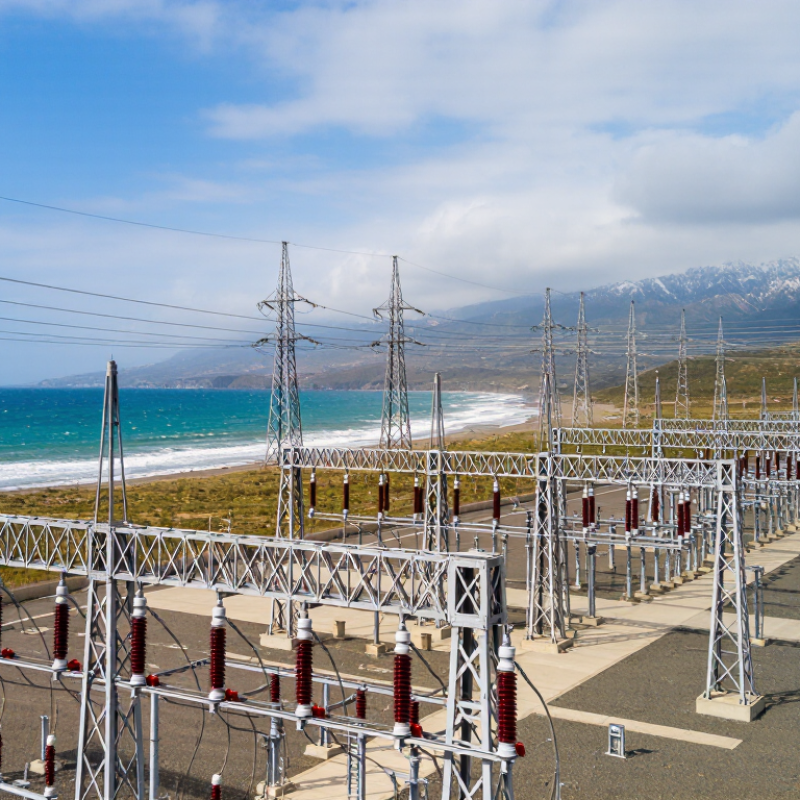
2026 Top High Voltage Isolator Suppliers Worldwide

High Voltage Isolators: Definition, Purpose, and Operating Principles

2026 Top High Voltage Isolator Suppliers Worldwide

High Voltage Isolators: Definition, Purpose, and Operating Principles

High-voltage isolators are mechanical switching devices used to separate electrical equipment from energized circuits. They do not normally interrupt heavy fault current. Instead, circuit breakers clear faults before an isolator operates. The isolator then provides a visible air gap for maintenance teams. That gap confirms physical separation.

Small gaps matter.

In a substation, an operator first opens the circuit breaker. After current falls to a safe level, the isolator blades move through an approved operating sequence. Motor drives or manual mechanisms can control this movement. Interlocking systems help prevent incorrect switching. Earthing switches may then discharge trapped energy and connect the isolated section to ground. The exact sequence depends on the installation design and operating procedure.

When evaluating suppliers in 2026, technical evidence should guide the decision. Check rated voltage, continuous current, short-time withstand current, insulation level, and mechanical endurance. Supplier documents should reference applicable testing requirements, such as IEC 62271-102, where relevant. Field experience shows that corrosion protection, contact alignment, and enclosure quality affect long-term reliability. A supplier should also provide clear drawings, test records, spare-part information, and service guidance.

Installation conditions deserve careful attention. Dust, salt, ice, wind, and temperature changes can affect operation. A mechanism that works smoothly in a factory may behave differently outdoors. This is where specifications can be imperfect. Site measurements and practical inspection still matter. Qualified personnel should verify clearances, interlocks, grounding, and operating torque before energization.
Key Performance Standards for High Voltage Isolator Suppliers

High voltage isolator suppliers worldwide should demonstrate more than production capacity. They need verified engineering experience, stable quality systems, and clear test records. The core reference is IEC 62271-102 for high-voltage disconnectors and earthing switches. It addresses insulation, mechanical performance, temperature rise, and switching functions. Rated voltage, current, short-time withstand, and peak withstand values must match the project design. Consistent evidence matters.

During supplier audits, engineers should inspect contact alignment, operating torque, locking devices, and visible isolation distances. A reliable supplier can provide routine test reports, type-test documentation, material certificates, and serial-number traceability. Factory acceptance tests should record timing, resistance, insulation performance, and repeated operating cycles. Field service records also reveal practical durability. Training quality matters. Operators need clear instructions for manual and motorized mechanisms.

Yet paperwork alone cannot confirm suitability. Site conditions can change the decision. Dust, ice, coastal salt, altitude, and strong temperature swings affect insulation and corrosion protection. Suppliers should state their environmental limits and explain enclosure or coating choices. That honesty is valuable. No test plan is perfect. A missed maintenance interval can expose weaknesses that laboratory testing never shows. The strongest suppliers invite technical questions, disclose design limitations, and support inspections after installation. They also review failures without hiding uncomfortable details. This habit improves reliability over time.

Key Performance Standards for High Voltage Isolators

This chart presents representative IEC voltage classes and associated lightning impulse withstand levels commonly used when evaluating high-voltage isolators and disconnectors. The values are based on standard insulation-coordination levels referenced by IEC 62271-1 and IEC 62271-102. Final specifications may vary according to system design, installation altitude, pollution level, and project requirements.

Leading Global Suppliers and Their Product Capabilities in 2026

High-voltage isolator suppliers are adapting to faster grid expansion and stricter reliability expectations in 2026. The IEA’s Electricity 2024 report projects global electricity demand to grow by an average of 3.4% annually through 2026. This growth increases demand for dependable disconnectors, earthing switches, and compact substation solutions.

Leading suppliers now offer both air-insulated and gas-insulated equipment for transmission and distribution networks. Their capabilities commonly cover voltage classes from medium voltage to extra-high voltage. Strong suppliers also provide type testing, factory acceptance testing, seismic evaluation, and lifecycle support under IEC 62271 requirements. Field evidence matters. CIGRE technical guidance continues to emphasize mechanical endurance, switching performance, and maintenance planning. These details often separate a safe installation from an expensive interruption.

Digital monitoring is becoming more practical. Suppliers increasingly integrate position sensors, contact-wear indicators, temperature measurement, and remote diagnostics. The IEA’s Renewables 2024 report expects renewable capacity to expand by roughly 5,500 GW by 2030, creating more switching points across modern grids. However, no supplier is equally strong in every region or voltage class. Some excel at custom engineering but lack rapid service coverage. Others offer broad catalogs with less flexible project support. Buyers should compare verified test records, installed references, spare-parts access, and response times, not only initial price. That gap deserves careful review.

Applications of High Voltage Isolators Across Power Networks

High voltage isolators are essential across modern power networks. They create a visible separation between energized equipment and sections under maintenance. Unlike circuit breakers, they normally do not interrupt fault current. Their value lies in controlled isolation and clear operational confirmation.

In transmission substations, isolators separate transformers, busbars, and overhead line bays. Engineers use them during planned maintenance, testing, and equipment replacement. Interlocking systems help prevent unsafe switching sequences. A visible contact gap also supports field verification before work begins. Small details matter, such as blade alignment, earthing connections, and reliable position indicators.

Distribution networks use compact isolators near feeders, ring-main units, and switching points. They help crews isolate damaged sections while keeping unaffected customers supplied. Renewable energy sites apply them around inverters, transformers, battery systems, and collector circuits. Industrial facilities use similar equipment beside large motors and high-voltage process loads. Conditions are rarely perfect. Dust, ice, corrosion, and limited access can reduce operating reliability. A specification may look correct on paper, yet installation quality often decides performance. Regular inspection should check contact pressure, insulation surfaces, mechanical travel, and grounding continuity. Operators also need procedures that match real site conditions, not only drawings. Some projects still underestimate space for manual operation and safe maintenance access. That oversight can delay isolation when every minute matters.

How to Evaluate and Select a Reliable Isolator Supplier

2026 Top High Voltage Isolator Suppliers Worldwide

Selecting a high voltage isolator supplier requires more than comparing prices. The IEA Electricity 2024 report expects global electricity demand to grow by about 3.4% annually through 2026. This growth increases pressure on substations, grid extensions, and maintenance teams. A reliable supplier should provide isolators designed for the project’s voltage, fault current, altitude, pollution level, and switching frequency.

Check compliance with IEC 62271-102, which covers high voltage alternating-current disconnectors and earthing switches. Request type-test reports, routine-test records, material certificates, and clear ratings for insulation and short-time withstand current. Do not accept a certificate without checking its scope and test date. Small details matter. Enclosure sealing, corrosion protection, terminal alignment, and operating torque can affect field reliability.

Evaluate the supplier’s manufacturing controls and service capability. Ask whether each unit has serial-number traceability, documented factory acceptance testing, and calibrated inspection equipment. Review delivery performance, spare-part availability, installation guidance, and response times for failures. CIGRE technical guidance repeatedly emphasizes maintenance planning and asset condition monitoring, not only initial equipment quality. A supplier with strong references may still perform poorly under unfamiliar climate conditions. I would inspect a comparable installation, speak with its maintenance team, and question optimistic service claims. The cheapest offer can become expensive after one failed operation.