2026 Top Glass Insulator 100b Types for Global Buyers
Global grid expansion is raising demand for dependable overhead-line hardware. The IEA Electricity 2024 report forecasts global electricity demand growth of about 3.4% annually from 2024 to 2026. That growth increases pressure on transmission planners, distributors, and procurement teams.
This guide examines the 2026 Top Glass Insulator 100b Types for Global Buyers. The term “Glass Insulator 100b” commonly refers to a cap-and-pin glass suspension insulator associated with 100 kN mechanical performance. However, naming practices vary between manufacturers and markets. Buyers should verify the exact designation against IEC 60305, the supplier’s drawings, and certified test results.
Small differences matter.
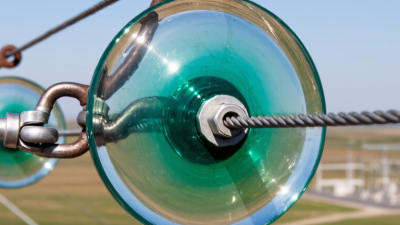
A clear glass shell, galvanized cap, cement joint, and locking hardware must work together under wind, ice, vibration, and pollution. CIGRE technical publications repeatedly emphasize coordinated insulation design, field contamination, and reliable maintenance planning. These issues become practical when a string operates beside a dusty road or a coastal substation.
The product comparison will consider mechanical load, creepage distance, dry-arcing distance, impulse withstand, glass quality, corrosion protection, and traceability. It will also distinguish standard 100 kN designs from higher-strength or special-pollution options. Independent laboratory reports, factory quality records, and type-test documentation remain essential.
No single model fits every network. That is easy to overlook. Climate, voltage class, fittings, transport conditions, and national standards can change the correct choice. This overview therefore aims to support informed sourcing, while recognizing that catalogue descriptions alone cannot replace engineering review.
ANSI 100B Glass Insulator Definition: 100 kN Mechanical Rating and Standards
In many procurement catalogs, an ANSI 100B glass insulator denotes a suspension unit with a 100 kN mechanical rating. The rating means mechanical failing load, not the permitted everyday working load. That distinction matters.
ANSI C29.2 provides requirements for porcelain and glass suspension insulators. IEC 60383-1 is also commonly referenced in international projects. Buyers should compare the complete specification, not only the 100B label. Check coupling type, creepage distance, diameter, spacing, and electrical withstand values. A 100 kN rating alone cannot confirm suitability for every transmission line.
Glass offers a visible inspection advantage. Cracks, punctures, and serious surface damage may be easier to identify during maintenance. Field teams still need proper cleaning and close visual checks. Salt, dust, and industrial deposits can reduce insulation performance. Weather conditions matter greatly.
Installation experience shows that hardware compatibility is often overlooked. Verify ball-and-socket dimensions before shipment. Confirm galvanizing quality and locking-device fit. Test certificates should identify the rated load, routine inspection results, and applicable standard. Ask for drawings with tolerances.
Some sellers treat “100B” as a complete product description. It is not. Project voltage, pollution level, conductor load, and altitude can change the required design. A careful buyer should review the data sheet with an independent engineer. Small assumptions can become expensive mistakes.
2026 Top Glass Insulator 100B Types for Global Buyers
ANSI 100B Glass Insulator Definition: 100 kN Mechanical Rating and Standards
The chart compares common ANSI suspension-insulator mechanical rating classes. An ANSI 100B glass insulator has a nominal specified mechanical rating of 100 kN, while the higher classes provide greater mechanical load capacity. Mechanical rating is not the same as operating voltage, insulation level, or creepage distance; these electrical parameters must be verified separately against the applicable ANSI and IEC requirements.
Tempered Glass Performance: 70–160 kN Strength and 100B Electrical Ratings
Tempered glass insulators remain practical for high-voltage overhead lines because damage is usually visible after failure. IEC 60305 classifies common cap-and-pin units at 70, 100, 120, and 160 kN mechanical strength levels. The U100B designation indicates a 100 kN mechanical rating, not a complete electrical rating. This distinction matters during procurement. Line voltage, impulse withstand, creepage distance, and pollution exposure must be specified separately.
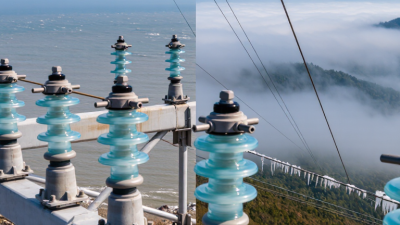
Glass performs well under thermal cycling and ultraviolet exposure. Its transparent body also helps inspectors identify punctures, cracks, and shattered sections from the ground. CIGRE Technical Brochure 555 emphasizes site pollution severity when selecting insulation, especially near coastlines, deserts, and industrial corridors. IEC 60815-1 further links insulation design to pollution conditions rather than voltage alone. A 100B assembly may therefore require different creepage arrangements in clean inland air and salt-heavy coastal air.
Field experience still reveals compromises. Higher strength is not always better. Heavier 160 kN hardware can increase tower loading, transport cost, and installation effort. During acceptance checks, buyers should verify coupling dimensions, glass surface condition, cement alignment, and the manufacturer’s type-test records. One missed detail can undermine the entire string. It is also worth questioning catalogue language: “electrical rating” may describe several separate values, not one universal number. Tensile strength supports mechanical safety, while the insulation design determines actual voltage performance.
2026 Top Glass Insulator 100B Types for Global Buyers - Tempered Glass Performance: 70–160 kN Strength and 100B Electrical Ratings
Representative tempered-glass cap-and-pin suspension insulator classes based on IEC 60305-style designations. Electrical values are typical reference values and must be confirmed against the selected design, applicable standard, pollution level, and system requirements.
| Type |
Rated Electromechanical Failing Load |
Typical Disc Diameter |
Typical Unit Spacing |
Typical Creepage Distance |
Typical Dry Power-Frequency Withstand |
Typical Wet Power-Frequency Withstand |
Typical Lightning Impulse Withstand |
Common String Applications |
| U70B |
70 kN |
255 mm |
127 mm |
280–320 mm |
80–90 kV |
45–50 kV |
100–110 kV |
Medium-voltage and lower-transmission suspension strings |
| U100B |
100 kN |
255 mm |
127 mm |
320 mm |
90–100 kV |
50–55 kV |
110–120 kV |
Transmission suspension and tension strings |
| U120B |
120 kN |
255–280 mm |
127–146 mm |
320–380 mm |
95–110 kV |
55–60 kV |
120–130 kV |
Higher-load transmission lines and long-span structures |
| U160B |
160 kN |
280 mm |
146 mm |
380–400 mm |
110–120 kV |
60–65 kV |
130–145 kV |
Heavy-duty transmission, long spans, and high mechanical loading |
Technical note: In designations such as U100B, “100” identifies the nominal rated electromechanical failing load of 100 kN; it is not an independent system-voltage rating. Actual electrical performance depends on creepage profile, unit geometry, air clearances, altitude, contamination, frequency, and test requirements. Tempered glass units generally provide visible failure indication because the glass sheds after puncture or breakage.
Global Buyer Guide: IEC 60383, ANSI C29.2, and 2026 Compliance Criteria
For global buyers, 100B glass insulators should be assessed against IEC 60383 and ANSI C29.2, not only catalog descriptions. These standards address suspension-insulator design, electrical performance, mechanical strength, and verification testing. Check the exact edition and national adoption required for the destination market.
Request certified type-test reports covering dry and wet power-frequency withstand, impulse withstand, and mechanical failing load. The 100B designation may not mean identical dimensions across suppliers. Compare cap-and-pin geometry, creepage distance, coupling hardware, and glass body tolerances. Small differences can affect string assembly.
In 2026, compliance should include traceable material records, calibrated laboratory equipment, and documented routine inspections. Look for visual checks, dimensional records, galvanizing control, and batch identification on each shipment. A serious supplier should explain sampling plans clearly. Ask for test dates, laboratory accreditation, and report scope.
Do not accept “IEC compliant” as complete evidence. It is too vague. Confirm whether testing covers the offered design and production site. Field experience also matters: inspect packaging, edge protection, and moisture control before installation. I would still review pollution severity and altitude separately, because standard testing may not reflect every operating environment. One overlooked detail can invalidate an otherwise strong purchase decision.
100B Selection Metrics: Pollution Class, Creepage Distance, and Climate Range
2026 Top Glass Insulator 100B Types for Global Buyers
100B Selection Metrics: Pollution Class, Creepage Distance, and Climate Range
For global buyers, 100B glass insulators should be screened by service conditions, not catalogue appearance. Pollution class sets the first boundary. In clean rural air, a lower class may perform well. Coastal spray, cement dust, and industrial deposits demand stronger contamination resistance. Field inspections often reveal uneven dust layers. That detail matters. A laboratory result cannot fully reproduce it.
Creepage distance should match the site’s contamination severity and operating voltage. Longer creepage usually improves surface performance, but it also affects weight, spacing, and hardware selection. Climate range deserves equal attention. Check temperature limits, solar exposure, humidity, altitude, and freeze-thaw cycles. Glass can remain reliable for decades, yet poor transport storage or repeated thermal stress may change the outcome. A neat rating table can still mislead.
Tips: Compare pollution-class data with local weather records. Request routine and type-test evidence before purchase. Confirm dimensions through an engineering drawing. Do not select by creepage distance alone. I have seen projects over-specify this value while ignoring salt deposits and drainage. That mistake is easy to repeat. Recheck the design with field engineers, especially where climate data is incomplete.