
Leave Your Message

Top CTV 255 Glass Isolator Suppliers Worldwide?

The global demand for reliable transmission equipment is reshaping the glass isolator supply chain. The International Energy Agency reported that annual grid investment must exceed USD 600 billion by 2030 to support secure electricity transitions. This pressure makes supplier quality more important than a simple catalogue comparison.

This guide examines leading CTV 255 glass isolator suppliers worldwide. It considers manufacturing experience, product traceability, testing capacity, delivery performance, and technical support. The phrase “Ctv 255 Isolator En Verre” may describe a specific commercial designation, but naming conventions can vary between manufacturers. Buyers should confirm the rated voltage, mechanical load, creepage distance, and applicable IEC requirements before requesting quotations.

Details matter.

Industry reports from MarketsandMarkets and Grand View Research identify power transmission upgrades as major drivers for the electrical insulator market. However, market size estimates differ because analysts classify glass, ceramic, composite, and substation products differently. That limitation deserves attention. A supplier may appear highly competitive through revenue data, yet provide limited evidence of factory testing or export experience. Stronger evaluation includes ISO certification, routine test records, batch traceability, and references from comparable grid projects. Field experience also helps reveal practical issues, such as chipped skirts, damaged wooden crates, or unclear replacement procedures. This introduction therefore frames the ranking as a procurement research tool, not a final approval list. Engineers should validate every specification against project drawings, climate conditions, and utility standards.

Top CTV 255 Glass Isolator Suppliers Worldwide?

CTV 255 Glass Isolators: Definition, Ratings, and IEC 60383-1 Scope

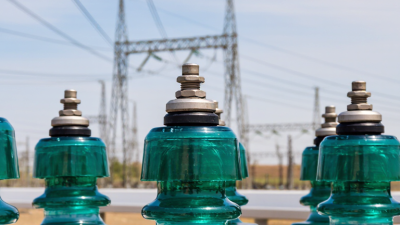
CTV 255 glass isolators are high-voltage glass insulator units used to support conductors and separate them from grounded structures. Their toughened glass body offers visible damage after serious electrical or mechanical failure. This feature helps maintenance teams locate problems from the ground. The term CTV 255 may describe a product series or performance class, so buyers should confirm its meaning with technical documents.

Important ratings include mechanical failing load, power-frequency withstand voltage, lightning impulse withstand, creepage distance, and arcing distance. Pollution level matters too. A long creepage path can improve performance near coastlines, factories, or dusty corridors. However, a higher mechanical rating does not automatically mean better electrical performance. That assumption can fail.

IEC 60383-1 covers ceramic and glass insulator units for AC overhead lines above 1,000 volts. It defines relevant terms, test methods, and acceptance requirements for these units. The standard does not replace a complete line-design assessment. Engineers still need to check altitude, conductor loads, contamination, temperature, and installation hardware. When comparing worldwide suppliers, request certified test reports, dimensional drawings, batch traceability, and evidence of routine testing. Ask whether the quoted CTV 255 rating matches the required service conditions. Small wording differences can hide major specification gaps.

Key Technical Metrics: 255 kV Class, Creepage Distance, and Mechanical Load

Top CTV 255 Glass Isolator Suppliers Worldwide?

For a 255 kV glass isolator, voltage class alone is not enough. Engineers should verify the system’s highest operating voltage, switching impulses, and pollution severity. IEC 60815-1 identifies creepage design as site-dependent, not a universal catalogue value.

Creepage distance needs careful calculation. Common reference levels include 25 mm/kV and 31 mm/kV for heavier pollution conditions. At 245 kV, these values equal approximately 6,125 mm and 7,595 mm. IEC 60815-3 also requires attention to profile shape, hydrophobic contamination behavior, and uneven wetting. More distance is not always better.

The mechanical load deserves equal scrutiny. Glass disc strings for this class often use specified mechanical loads between 120 kN and 210 kN, depending on conductor tension and line design. The supplier should provide routine-test results, puncture performance, and aging evidence under IEC 60305 and IEC 61109 requirements. CIGRE overhead-line insulation guidance also emphasizes coordinated electrical and mechanical verification, rather than isolated catalogue figures.

Check the end fittings.

A 255 kV label can hide different design assumptions. A project review should compare creepage, dry-arcing distance, coupling dimensions, SML, and impact resistance in one table. I would also request factory inspection records and type-test dates. Data sheets look precise, but site contamination and transport damage can still defeat a theoretically correct selection.

Top CTV 255 Glass Isolator Suppliers Worldwide? - Key Technical Metrics: 255 kV Class, Creepage Distance, and Mechanical Load

Anonymized comparison of representative supplier capability profiles for 255 kV-class glass cap-and-pin insulator assemblies. Values are typical engineering ranges and should be confirmed against the supplier’s certified drawings, test reports, and applicable utility specifications.

Profile Primary Market Product Configuration Rated Voltage Class Typical Creepage Distance Typical Mechanical Load Typical Shed Diameter Applicable Standards Quality Documentation
Supplier Profile 01 East Asia Hardened glass cap-and-pin string unit 255 kV class; suitable for 230–245 kV systems subject to system design Approx. 550–630 mm per unit; string length selected by pollution severity Typical electromechanical failing load: 120–160 kN 255–280 mm IEC 60305; IEC 60120; IEC 60433 Type-test, routine-test, and dimensional inspection records
Supplier Profile 02 South Asia Anti-fog glass suspension insulator string 255 kV class; application dependent on insulation coordination Approx. 600–720 mm per unit for medium-to-heavy pollution applications Typical electromechanical failing load: 160–210 kN 280–320 mm IEC 60305; IEC 60815; IEC 62217 Routine electrical tests, mechanical load tests, and traceability records
Supplier Profile 03 Europe High-strength toughened glass suspension unit 245/255 kV application range, subject to utility specification Approx. 500–650 mm per unit; creepage selected using site pollution data Typical electromechanical failing load: 160–240 kN 255–300 mm IEC 60305; IEC 60815; IEC 60168 Design verification, type-test certificates, and batch test reports
Supplier Profile 04 North America ANSI-style suspension glass insulator assembly 230 kV system class; 255 kV maximum equipment rating may be project-specific Approx. 500–700 mm per unit depending on profile and contamination level Typical mechanical rating: 120–180 kN 254–305 mm ANSI C29.1; ANSI C29.2; IEC 60305 where specified Certified mechanical, electrical, and visual inspection data
Supplier Profile 05 Middle East Pollution-resistant glass suspension string unit 255 kV class for high-temperature and contaminated environments Approx. 650–850 mm per unit for severe pollution and coastal exposure Typical electromechanical failing load: 160–210 kN 280–330 mm IEC 60305; IEC 60815; IEC 60507 Salt-fog or pollution-performance testing, type tests, and routine tests
Supplier Profile 06 Latin America Standard-profile toughened glass cap-and-pin unit 245/255 kV class, configured in multi-unit suspension strings Approx. 500–620 mm per unit for light-to-medium pollution conditions Typical electromechanical failing load: 120–160 kN 255–280 mm IEC 60305; IEC 60120; IEC 60433 Routine tests, zinc-sleeve inspection, and lot traceability
Supplier Profile 07 Oceania Heavy-duty glass suspension insulator with corrosion-resistant fittings 255 kV class for overhead transmission applications Approx. 600–750 mm per unit; final string designed for local pollution class Typical electromechanical failing load: 180–240 kN 280–320 mm IEC 60305; IEC 60815; AS/NZS project requirements Material certificates, type tests, routine tests, and coating inspection
Technical note: Creepage distance is not determined by voltage alone. The final value depends on pollution severity, site altitude, line configuration, washing policy, hydrophobicity requirements, and the selected insulation coordination study. Mechanical load values refer to the insulator unit’s specified electromechanical failing load and must not be confused with the complete string assembly’s allowable working load.

Worldwide Supplier Screening Using IEC 60383-1 and ISO 9001 Evidence

Worldwide Supplier Screening for CTV 255 Glass Isolators

Supplier screening starts with documents, not rankings. For a CTV 255 glass isolator, IEC 60383-1 evidence should match the exact design offered. Request type-test reports, routine-test records, drawings, and declared electrical ratings.

Check the test laboratory, report date, sample identification, and measured results. Generic test certificates are weak evidence.

ISO 9001 certification helps evaluate the supplier’s quality system. It does not prove product compliance by itself. Verify the certificate scope, issuing body, validity period, and manufacturing location.

Then review controls for glass forming, tempering, cementing, metal fittings, and final inspection. Traceability should connect each shipment to production batches and inspection records. Ask how nonconforming units are isolated.

Factory experience matters. A reliable supplier can explain packing methods, humidity protection, visual inspection, and damage handling. During a remote or physical audit, inspect storage areas and sample labels.

Small details often reveal process discipline. However, screening is not perfectly objective. A polished report may hide weak sampling, while an incomplete file may reflect poor communication rather than poor manufacturing. I would record both findings and unresolved gaps.

Independent verification testing remains sensible before large-volume purchasing, especially when service conditions differ from the tested environment. The final shortlist should reflect evidence quality, repeatability, and technical transparency.

Regional Comparison of Leading CTV 255 Glass Isolator Manufacturers

Regional Comparison of Leading CTV 255 Glass Isolator Manufacturers

The CTV 255 glass isolator market is regionally uneven. Public reports rarely separate this exact specification, so supplier rankings require careful qualification. The International Energy Agency’s Electricity Grids and Secure Energy Transitions report estimates that annual grid investment must rise from about USD 600 billion to nearly USD 900 billion by 2030. That pressure supports demand for high-voltage insulation, but not every producer has equal testing depth.

European manufacturers

European manufacturers often emphasize traceability, IEC 60383 compliance, and long-term field records. Their documentation is usually detailed. Delivery can be slower, especially for customized metal fittings.

Asian production centers

Asian production centers generally offer broader capacity and more competitive pricing. Many also support automated glass forming and high-volume cementing. However, buyers should verify batch consistency, thermal shock performance, and mechanical load results. Low price alone is a weak signal.

North American suppliers

North American suppliers often compete through local inventory, engineering support, and utility approval experience. This can reduce project delays, even when unit costs are higher.

The World Bank Logistics Performance Index 2023 shows clear differences in customs efficiency and infrastructure across regions, which directly affects delivery risk. The comparison is not perfectly clean. “CTV 255” may refer to different technical interpretations. Buyers should request drawings, routine test records, type-test evidence, salt-fog results, and independent inspection reports before making a shortlist. Sales claims need evidence.


Supplier Evaluation Matrix: Testing, Delivery Capacity, Warranty, and Cost

Top CTV 255 Glass Isolator Suppliers Worldwide

A practical supplier matrix should score testing, delivery capacity, warranty, and landed cost. For CTV 255 glass isolators, request mechanical failing-load results, power-frequency tests, impulse tests, thermal-shock checks, and porosity evidence. IEC 60383-1 provides a useful reference for glass and ceramic line insulator testing. Ask for laboratory accreditation, batch traceability, and sample identification. A polished certificate is not enough.

Delivery capacity needs measurable proof. Check furnace output, mold availability, monthly production, export packing, and on-time shipment records. The IEA Electricity 2024 report projects global electricity demand to grow by about 3.4% annually through 2026. That pressure may increase procurement queues. The World Bank Logistics Performance Index 2023 also evaluates tracking and timeliness, so request shipment data rather than general promises. Warranty terms should state the coverage period, inspection process, replacement duty, and response time. Cost comparisons must include tooling, testing, packaging, freight, insurance, and rejected-unit handling. The cheapest quotation can become expensive quickly.

Tips: Use a weighted matrix. Give testing 35%, delivery 25%, warranty 20%, and cost 20%. Require two production samples before approval. Review three recent batches, not one. The matrix is helpful, but imperfect; test results may not predict every field condition. Ask suppliers to explain failures openly. That answer often reveals more than a sales presentation.

Top CTV 255 Glass Isolator Suppliers Worldwide

Supplier Evaluation Matrix: Testing, Delivery Capacity, Warranty, and Cost

This neutral procurement model assigns the greatest weight to testing compliance and delivery capacity because glass isolators require documented electrical, mechanical, thermal, and dimensional verification, together with reliable project availability. Warranty coverage and total cost are also included to support a balanced supplier comparison. The percentages represent evaluation weights rather than company-specific performance claims.