For global buyers, selecting a Glass Insulator 160b supplier requires more than comparing catalog prices. The decision affects grid stability, maintenance schedules, and long-term procurement risk. A suitable supplier should demonstrate consistent porcelain quality, accurate cap-and-pin dimensions, reliable cementing, and documented electrical performance. Product photographs help, but test reports matter more.
Dr. Adrian Cole, a power-transmission materials engineer, explains, “A dependable insulator begins with controlled materials and ends with traceable testing.” His observation reflects a practical purchasing reality. Buyers should review mechanical strength, power-frequency withstand ratings, impulse performance, thermal cycling results, and applicable IEC or ANSI requirements. Factory inspection records can reveal whether each production batch receives equal attention. That detail matters.
Small details matter.
Top Glass Insulator 160B Suppliers for Global Buyers should also be assessed through their delivery history, export experience, packaging methods, and after-sales communication. Strong suppliers normally provide drawings, inspection plans, certificates, and clear responses to technical questions. Wooden crates, shock protection, and moisture control deserve attention during international transport. A damaged insulator may look acceptable before installation, yet fail under severe weather or electrical stress.
No supplier is flawless. Even a careful comparison can miss changing raw-material costs, port delays, or inconsistent subcontracting. Buyers should therefore verify recent references and request samples before approving large orders. This guide examines leading suppliers through product quality, certifications, manufacturing capability, responsiveness, and total ownership value. The goal is not to name the cheapest source, but to identify a dependable partner for demanding transmission projects.
Glass Insulator 160B is a toughened-glass cap-and-pin unit used in overhead transmission strings. The “160” commonly indicates a rated mechanical failing load of 160 kN. The “B” identifies a specific design profile under applicable insulator standards. Exact meaning can vary by standard and drawing, so buyers should verify the designation carefully.
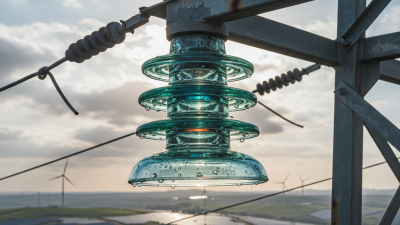
Its design combines a glass insulating body, galvanized iron cap, and steel pin. Toughened glass offers high visibility after puncture because damaged sections break into small pieces.
A typical 160B unit has a nominal diameter near 280 mm, unit spacing around 146 mm, and creepage distance near 380 mm. These values may change with the manufacturer’s approved design. Do not rely on catalogue labels alone.
Electrical evaluation usually includes power-frequency withstand, impulse withstand, and puncture performance. Mechanical tests confirm tensile strength, impact resistance, and connection security. Hot-dip galvanized fittings help reduce corrosion around the metal interfaces.
Field experience shows that breaking load receives too much attention. Salt, dust, and poor washing schedules can reduce practical performance. That deserves more attention.
Buyers should request routine-test records, type-test evidence, dimensional drawings, and batch traceability. Installation crews must also check ball-and-socket compatibility, locking devices, and torque requirements before string assembly.
For global buyers, a 160B glass insulator should meet the applicable IEC requirements for cap-and-pin insulators. IEC 60305 is commonly referenced for electrical and mechanical performance. IEC 60383-1 supports testing methods and acceptance criteria. Buyers should also verify coupling dimensions under IEC 60120 when compatible hardware is required.
A reliable supplier should provide type-test reports, routine-test records, material traceability, and dimensional inspection data. Check the rated mechanical load, power-frequency withstand voltage, lightning impulse withstand, and puncture performance. Toughened glass should show consistent thickness and a clean fracture pattern after failure. Inspectors should also examine metal fittings, cement joints, galvanizing, and pin alignment. Small surface marks matter. They may reveal handling or forming problems.
Tips: Request samples from the same production line. Compare glass color, cap dimensions, and coupling fit. Ask for test dates and laboratory accreditation, not only certificates. A factory visit can reveal storage issues, although it cannot replace independent testing. No inspection plan is perfect. Even experienced buyers may overlook packing damage or humidity exposure during shipping. Require protective packaging, batch identification, and a clear rejection process before placing a large order.
When evaluating Glass Insulator 160B suppliers, begin with verified manufacturing experience. Ask how long they have produced this model and which transmission projects use it. A reliable supplier should provide dimensional drawings, material specifications, and recent laboratory test reports. Check critical details, including dielectric strength, mechanical load, creepage distance, and resistance to thermal shock. Numbers matter.
Factory evidence is equally important. Request a virtual or on-site production review, if practical. Look for controlled forming, clean glazing, careful annealing, and visible quality checkpoints. Each batch should have traceable records, inspection dates, and packing details. Confirm whether testing follows recognized international standards and whether independent inspection is accepted. Do not rely on certificates alone. Documents can be incomplete, outdated, or poorly matched to the actual 160B design. I have seen buyers overlook this gap.
Tips: Compare at least three suppliers using the same technical checklist. Request a sample before approving bulk production. Examine the glaze for pinholes, cracks, uneven color, or rough edges. Ask for drop-test and moisture-protection details for long-distance shipping. Confirm lead times in writing, including mold preparation and inspection periods. Clear communication is a practical quality test. If replies avoid direct measurements, treat that as a warning. A lower price may reflect thinner documentation, weaker packaging, or limited after-sales support. Recheck everything.
Manufacturing capacity matters when projects require hundreds or thousands of 160B glass insulators. Reliable suppliers should provide clear monthly output, furnace capacity, and production schedules. Buyers should request recent delivery records, not only catalogue figures. A capable factory usually controls forming, annealing, assembly, and final inspection under documented procedures. Sample checks should include visual defects, dimensional accuracy, mechanical strength, and electrical performance. Small surface marks can become serious concerns during transport or installation.
Customization should remain practical and technically controlled. Suppliers may adjust fittings, coating details, packing methods, and identification markings. Every change should receive an approved drawing before production begins. The 160B designation alone may not define every project requirement. Voltage class, creepage distance, coupling design, and applicable testing standards require careful confirmation. This step is sometimes rushed. It should not be.
Export support can reduce costly delays. Experienced teams prepare commercial invoices, packing lists, certificates, inspection reports, and shipping documents accurately. Strong packaging uses separators, moisture protection, and reinforced pallets for long-distance handling. Suppliers should explain lead times, port options, and container loading plans. Pre-shipment inspections add useful evidence, especially for first-time orders. Still, no factory is flawless. Buyers should record agreed tolerances, replacement terms, and communication contacts before payment. Clear records create accountability when production conditions change.
For global buyers, pricing a Glass Insulator 160B requires more than comparing unit quotations. Ask suppliers to separate the insulator, metal fittings, testing, packing, and export documentation. A low quote can be misleading. Confirm whether prices follow FOB, CIF, or another Incoterm, because each transfers different costs and risks.
UNCTAD’s Review of Maritime Transport 2024 reported a 0.4% decline in global seaborne trade during 2023, followed by expected growth of 2.1% in 2024. Freight conditions can change quickly. Request shipping validity for at least 30 days. Include pallet dimensions, gross weight, container loading plans, and insurance limits. Glass units need rigid separators and moisture-resistant packaging. One broken layer can delay an entire project.
Procurement teams should verify drawings, creepage distance, mechanical strength, and applicable IEC 60383 or equivalent requirements. Request routine-test records, batch traceability, and representative type-test evidence. ISO 9001 certification supports process control, but it does not replace product testing. I would also compare rejection procedures before ordering. They are often overlooked. The IEA’s Electricity Grids and Secure Energy Transitions report highlights rising global grid investment needs, increasing pressure on delivery reliability. Public freight indexes help, but they rarely match your exact route. Build a landed-cost model using two shipping scenarios and a realistic breakage allowance.
| Supplier Profile | Typical Supply Region | Product Configuration | Rated Mechanical Failing Load | Applicable Standards | Indicative Export Price* | Typical MOQ | Production Lead Time | Common Trade Terms | Shipping Considerations | Recommended Buyer Checks |
|---|---|---|---|---|---|---|---|---|---|---|
| Profile A High-volume suspension-insulator manufacturer |
East Asia | U160B glass suspension insulator; clevis-and-tongue or ball-and-socket coupling; standard disc profile | 160 kN | IEC 60305; IEC 60120 coupling dimensions; IEC 383-1 test principles where specified | US$18–32 per unit, FOB, before options and testing | 500–1,000 units | 35–60 days after drawing approval | FOB, CFR, CIF | Use export pallets with separators; confirm gross weight, container loading plan, and breakage allowance | Verify type-test reports, coupling dimensions, glass tempering process, zinc-sleeve quality, and batch traceability |
| Profile B Utility-project-focused manufacturer |
South Asia | U160B suspension unit with galvanized hardware; standard or anti-fog profile subject to order | 160 kN | IEC 60305; IEC 60120; purchaser-specific utility specifications | US$20–36 per unit, FOB, depending on profile and hardware | 300–800 units | 40–70 days after purchase-order confirmation | FOB, FCA, CIF | Allow additional time for port congestion and inland transport; request moisture-resistant packing for monsoon routes | Confirm hardware material, galvanizing thickness, inspection plan, packing method, and spare-unit policy |
| Profile C Small-batch and customized-order supplier |
Central or Eastern Europe | 160 kN glass disc insulator; customized creepage distance, cap-and-pin assembly, or line-hardware configuration | 160 kN | IEC 60305; IEC 60120; EN or national utility requirements when included in the specification | US$30–55 per unit, FCA or EXW, excluding custom testing | 100–300 units | 30–55 days for standard configuration; longer for engineered variants | FCA, EXW, DAP | Road freight may be economical within regional markets; calculate pallet height and axle-weight restrictions | Approve drawings before production; define dimensional tolerances, surface defects, testing scope, and change-control procedure |
| Profile D Project-integrator with assembly capability |
Southeast Asia | U160B glass insulator supplied as a string assembly with clevis, tongue, yoke plate, or line accessories | 160 kN for the insulator unit; assembly rating depends on all components | IEC 60305; IEC 60120; project-specific assembly and galvanizing requirements | US$42–78 per assembled unit, FOB, depending on accessories | 200–500 assemblies | 45–75 days, including assembly and inspection | FOB, CFR, CIF, DAP | Assemblies require stronger crates and clearer center-of-gravity marking; verify lifting and handling instructions | Check complete assembly drawings, component certificates, pin compatibility, inspection records, and replacement-part availability |
| Profile E Distributor with regional stock |
Middle East or North Africa | Standard 160 kN glass disc insulator; stock configuration with limited customization | 160 kN | IEC 60305 and original manufacturer documentation where available | US$28–48 per unit, warehouse or delivered pricing depending on destination | 50–200 units | 3–15 business days from available stock; replenishment may take 45–75 days | EXW, FCA, DAP, local delivered terms | Shorter delivery time but higher unit cost; inspect warehouse conditions and confirm protection from impact and sand | Request batch numbers, storage history, original test documentation, return terms, and physical inspection before dispatch |
*Indicative prices are shown in U.S. dollars per unit for budget comparison only and exclude taxes, duties, freight surcharges, special testing, and customized accessories unless stated otherwise.